
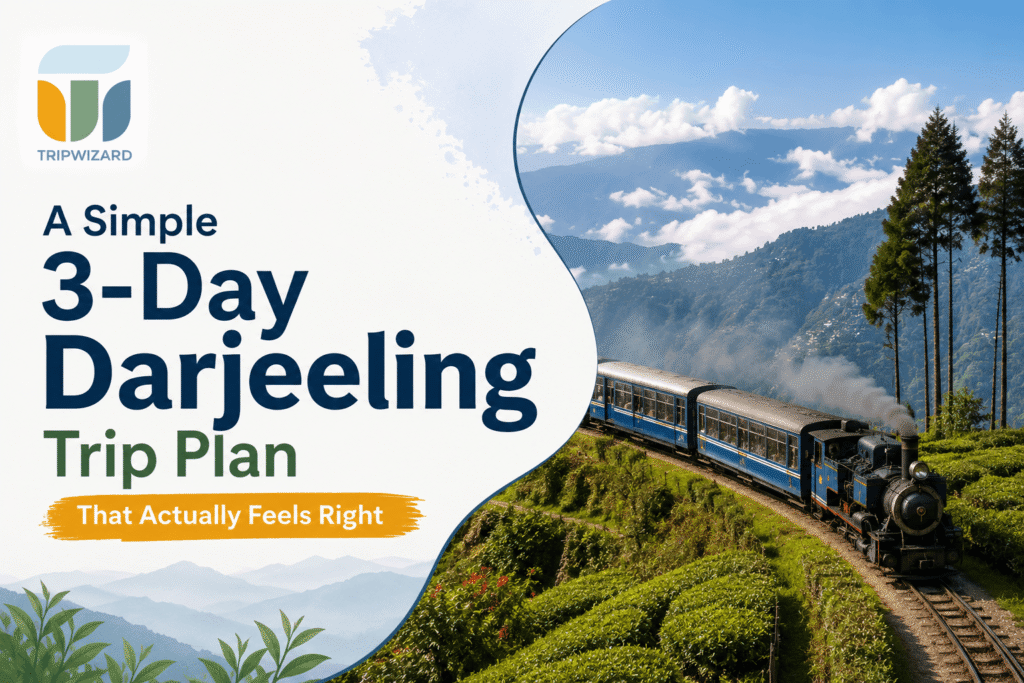
Darjeeling is not the kind of destination where everything needs to be packed tightly into a schedule. In fact, trying to do too much here usually takes away from the experience.
It’s a hill town where the journey, the weather, the small stops on the way, and even the slow evenings matter as much as the sightseeing points.
A 3-day plan works well because it keeps things balanced — a smooth arrival, one full excursion, and one proper local sightseeing day. Nothing feels rushed, and there is still enough time to just sit back and take in the hills.
Here’s how a simple trip usually flows.
Day 1: The journey into Darjeeling (via Kurseong)
The trip usually begins with a drive from Bagdogra Airport or NJP railway station towards the hills.
The moment the road starts curving and climbing, the mood of the trip changes. It doesn’t happen suddenly, but slowly. Tea gardens start appearing on both sides, small houses come and go, and the air starts feeling lighter and cooler.
One of the common stops on the way is Kurseong. It is not a big sightseeing halt, just a short break where a cup of tea fits perfectly. Many people stop here for a while at a local viewpoint or tea spot, just to stretch and take in the mountain surroundings.
From Kurseong, the road towards Darjeeling becomes more winding. This is where the landscape really starts changing. Clouds sometimes come down to road level, and visibility shifts depending on weather.
By the time Darjeeling is reached, the pace naturally slows down.
After check-in, the rest of the day usually stays open. Most people don’t plan much for this evening. A short walk around the nearby area, a quiet café visit, or just resting after the journey fits better here. Darjeeling doesn’t really demand activity on the first day — it feels more like a place where settling in is enough.
Day 2: A full day towards Mirik and the Indo–Nepal border
The second day is usually planned outside Darjeeling.
After breakfast, the drive starts towards Mirik, a small hill town surrounded by tea gardens and forest patches. The route itself feels very different from the main town — less crowded, more open, and more relaxed.
On the way, tea gardens like Gopaldhara Tea Estate often come into view. Most stops here are quick, just for photos or a short break. The green slopes and quiet surroundings make even small halts feel worth it.
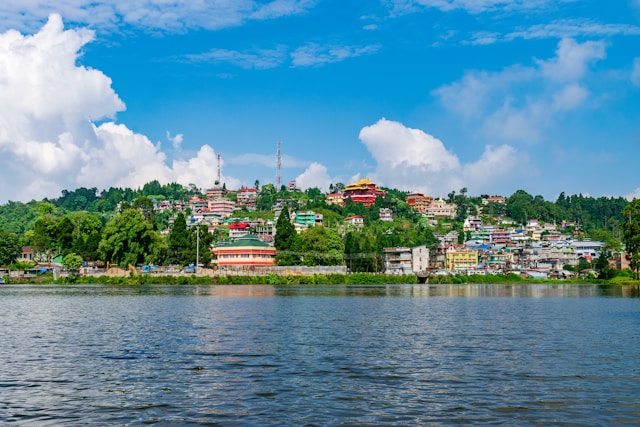
Once Mirik is reached, the main stop is Sumendu Lake. This is a calm lake surrounded by walking paths and small local activity. People usually spend time here just walking, sitting near the water, or taking a short boat ride. Nothing feels rushed here, and that is exactly how Mirik works best.
Horse riding is also available around the lake area, depending on interest.
From Mirik, the route continues towards the Pashupati Bazaar at the Indo–Nepal border. This is a small market zone where cross-border trade influence is visible. Shops here usually sell a mix of local and imported goods, and it becomes a casual shopping stop more than anything else.
Since vehicles from India are not allowed beyond the border check post, a local vehicle is arranged for the short movement on the Nepal side if required.
After this, the return journey towards Darjeeling begins. By the time evening comes, most of the day has already been spent on the road and in small stops, so the rest of the evening is usually kept free.
Back in Darjeeling, it is mostly a quiet night — some rest, maybe a short walk, or just sitting somewhere with a view if the weather is clear.
Day 3: Darjeeling local sightseeing and Tiger Hill
This is the main sightseeing day, and it usually starts very early.
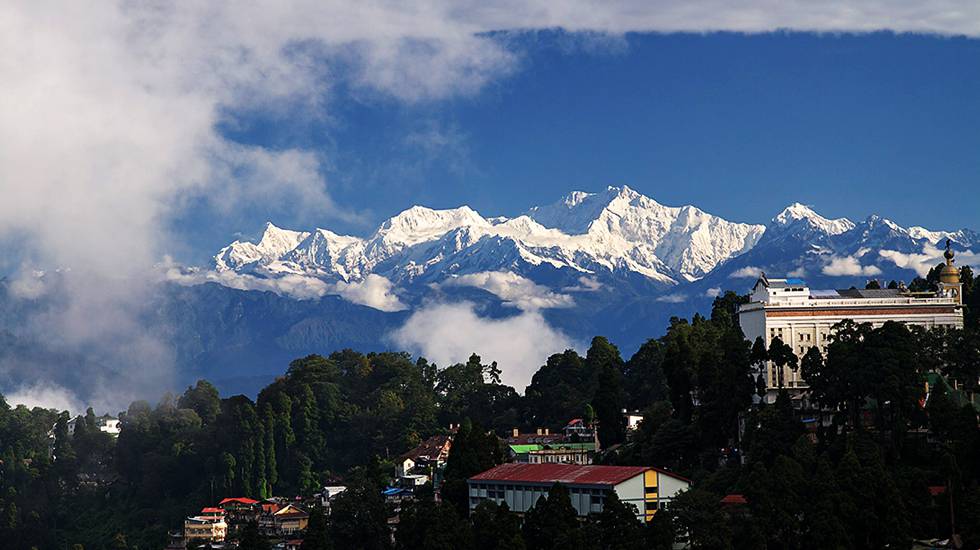
The first stop is Tiger Hill, which is known for sunrise over Mt. Kanchenjunga. The timing is early, around 4:30 AM or slightly adjusted depending on season and entry flow. The experience here depends a lot on weather — some days the view is very clear, some days clouds cover the range, but the early morning atmosphere itself is what people usually remember.
After returning from Tiger Hill, breakfast is followed by local sightseeing.
The day covers well-known spots within and around Darjeeling town, such as:
- Himalayan Mountaineering Institute
- Padmaja Naidu Zoological Park
- Tibetan Refugee Centre
- Tea garden viewpoints (outer view)
- Japanese Temple
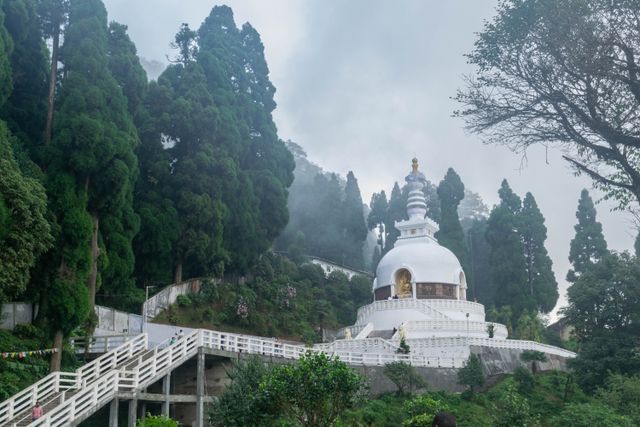
- Peace Pagoda
These places are not far from each other, so the day moves at a comfortable pace without long travel gaps.
The zoo and institute area gives a sense of the region’s mountaineering history, while the temple and peace pagoda add a quieter, slower side to the town. Tea gardens on the way keep reminding you where you are — a hill station built around tea, weather, and landscape.
By afternoon, most sightseeing is usually completed.
The rest of the day is kept flexible. Some people prefer walking around Mall Road, some sit in cafes, and some simply relax at the hotel. If available, the toy train ride is also an option, but it depends on timing and tickets, so it is not something that always fits into every plan.
This day doesn’t feel heavy. It is more about small stops, short movements, and taking in the town slowly.
Day 4: Departure
After breakfast, the return journey begins towards Bagdogra Airport or NJP railway station.
The drive back follows the same mountain roads and tea garden stretches. But the feeling is slightly different — slower, quieter, and more reflective compared to the arrival day.
This is usually the end of the trip.
A 3-day Darjeeling trip works best when it is kept simple. One day for arrival and settling in, one full day for an outside excursion, and one proper local sightseeing day is usually enough.
Darjeeling is not a place that needs to be rushed. It is a place that feels better when there is space in the plan — space to stop on the road, sit somewhere for a while, or just watch the hills without doing anything specific.
And in the end, that is what most people remember more than the actual list of places — the feeling of moving slowly through the hills, not just covering them. Whether you plan it yourself or through Darjeeling DMC a keeping the itinerary simple usually leads to a better experience.